At the 2025 NNA Conference, I presented two workshops on improving communication with neurodivergent clients during notarizations. This article adapts that material into a practical resource for any Notary who wants to make their signings more inclusive. The goal is simple: a clear, actionable guide to make appointments smoother and less stressful for clients who process sensory information differently.
What does “neurodivergent” mean?
The word “neurodivergent” is often used as an umbrella term describing differences in how people's brains work compared to what’s considered typical. It can include conditions such as autism spectrum disorder (ASD) or other neurological or developmental conditions such as attention-deficit/hyperactivity disorder (ADHD).
Chances are, you’ve already worked with neurodivergent clients without realizing it. Understanding this matters because neurodiversity is common — many clients you meet will have needs you can easily accommodate with a few thoughtful adjustments.
Why this matters for Notaries
Notarizations are often short, transactional moments, but they can be high-pressure for someone sensitive to noise, bright lights, or rushed instructions. Small changes — clear language, a quieter space, and a little extra time — can turn a stressful appointment into a calm, efficient one. That’s good for your client and good for your business: fewer mistakes, fewer repeat visits, and better word-of-mouth.
People who are neurodivergent may process information differently, react to sensory input more strongly, or prefer direct, literal communication. This doesn’t require special training or expertise in every condition. It just means being open, flexible, and prepared to make reasonable adjustments.
Set expectations before the appointment
A little prep goes a long way. Send a short message before the appointment that says what will happen, how long it will take, and what to bring. Keep it simple and concrete: a one-paragraph agenda and a short list of required documents is perfect. Let clients know they can bring a support person or service animal if needed.
If a client tells you they need something specific — extra time, a quieter room, or written instructions — note it and follow through. That small step signals respect and reduces the client’s anxiety.
Match your communication to the person
Many neurodivergent people prefer direct, literal language. Avoid metaphors, idioms, or vague phrases like “we’ll touch base.” Instead, say exactly what will happen: “I will check your ID, then you’ll sign the document where needed, then I’ll complete the notarial certificate and give back the documents.” If someone prefers written instructions, provide them. If they like text messages, use text. Ask once, then honor the preference.
Be patient with repetition. If a client asks the same question more than once, treat it as part of the process rather than a nuisance. Normalizing repetition — saying something like, “Feel free to ask me to repeat anything” — helps people feel safe and understood.
Mind the environment and sensory needs
Sensory overload is real. Bright fluorescent lights, strong scents, background music, or a cluttered table can make it hard for someone to focus. When possible, offer a quieter, low-stimulus space. Dim the lights if you can, keep the signing surface tidy, and avoid strong perfumes or air fresheners in the room.
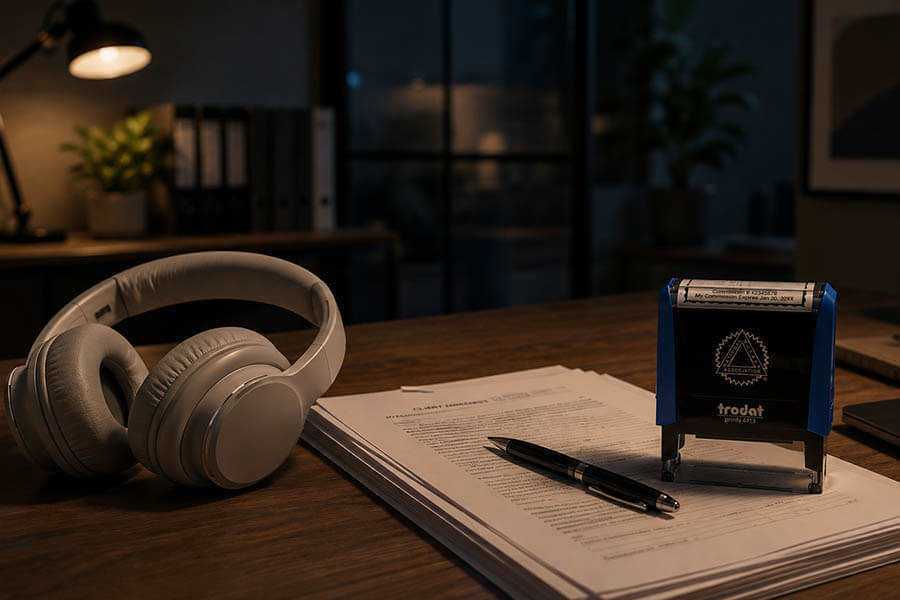
If a client brings noise-canceling headphones, sunglasses, or a fidget, that’s fine. These are tools that help people regulate sensory input and stay present. Allowing these items doesn’t affect the validity of the notarization; it just makes the process more workable and less stressful for the client.
Pace, processing, and tools
People process information at different speeds. For some, numbers and legal language can be overwhelming. Here are ways to help your signers:
- Slow down when you provide instructions or explain the process.
- Break information into bite-sized pieces.
- Offer to show the same information in a different format — point to the signature line, use a flat edge (like a ruler) to pinpoint key wording, or write a short note summarizing the action required.
- If a signing is long or complex, build in breaks. A five-minute pause can reset someone who’s feeling overwhelmed and prevent mistakes. Let clients know breaks are available without making them explain why they need one.
Emotional safety and rapport
You don’t need to be a counselor to create a sense of emotional safety. Keep your tone calm and neutral, avoid sudden movements, and give clear, predictable cues about what’s next. If a client seems anxious, a brief reassurance — “We’ll take this at your pace” — can help.
Some neurodivergent people may struggle with eye contact or small talk. Don’t force rapport. Focus on clarity and respect. If a client prefers minimal conversation, follow their lead. If they want to chat, be present and patient.
Accessibility and practical logistics
- Make sure your space is physically accessible and that you can accommodate support people and service animals.
- Have large-print options available (or offer a screen to zoom in) and be ready to use clipboards or lap desks if someone needs an adjustable signing surface.
- If a client uses a mobility device, clear a path and offer seating that works for them. These small conveniences reduce friction and speed up the signing.
When to ask and when to adapt
You don’t need to diagnose or label anyone. A simple, respectful question — “Is there anything I can do to make this easier for you?” — is enough. If a client shares a preference, make a note of it for future appointments.
There will be times when a requested accommodation isn’t feasible. In those cases, explain why briefly and offer an alternative. The goal is to be collaborative, not confrontational.
Why it’s worth the effort
Notarizations are about trust and accuracy. Making your process more inclusive reduces errors, improves client satisfaction, and builds a reputation for professionalism and care. As the population of neurodivergent people grows and workplaces become more inclusive, Notaries who adapt will be better positioned to serve a wider range of clients.
Notaries can be more inclusive and offer a welcoming, comforting, yet professional environment for their neurodivergent clients by implementing some or all of the accommodations discussed in this article.
You don’t have to implement every possible accommodation — pick a few that fit your practice and build from there.
Final thoughts
Start small. Add a short pre-appointment message, keep a quiet corner available, and practice using clear, literal language. Those three changes alone will improve many signings.
The views and opinions expressed in this article are those of the author and do not necessarily reflect the position of the National Notary Association. Guest contributions are published to foster informed discussion on topics relevant to the Notary office, and their inclusion does not constitute an endorsement by the NNA.

Christina Hough, Consultant and Notary Public, has been a California-commissioned Notary Public and a member of the National Notary Association (NNA) since 2006, and has served as an NNA Notary Ambassador® since 2025. In 2023, she was selected by the NNA as Notary of the Year. Other recognitions include Affiliates Awards from the National Association of Legal Assistants – The Paralegal Association and multi-year selection as one of the Top 100 Women of Influence in Law by San Diego Business Journal. Christina is a serial entrepreneur, consultant, legal professional, and Notary Public, often engaged to speak at conferences, webinars, podcasts, and other events on various topics, including, but not limited to, neurodivergence in business and law, marketing and branding, and personal and professional development. She is a dedicated volunteer and mentor who currently serves as Vice President of Membership for the San Diego Paralegal Association, among other board and committee roles. She also regularly mentors business, paralegal, and law students, and new and seasoned legal professionals through workshops and one-on-one sessions.